Advanced Therapies
Extracellular vesicles: real biology arriving well ahead of credible products
Cells genuinely communicate by releasing membrane-bound packages, and the distance between that discovery and anything sold in a clinic is currently very large.
What cells actually release
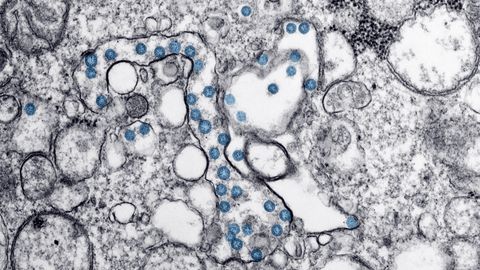
Cells release membrane-bound packages of varying size that carry proteins, lipids and nucleic acids into the surrounding space. These packages arise through more than one route, with some budding directly from the cell surface and others released from internal compartments. Once released, they can be taken up by other cells, delivering contents that alter the recipient cell's behaviour.
This constitutes a genuine mode of intercellular communication distinct from soluble signalling molecules binding surface receptors. The finding that they carry regulatory nucleic acids capable of altering gene expression in recipient cells is what drove the rapid expansion of the field. Their role in normal physiology is accepted, and that acceptance concerns the biology rather than any particular preparation offered for sale.
Why the terminology is contested
The term most commonly used commercially refers strictly to vesicles originating from a specific internal compartment. Distinguishing those from surface-derived vesicles requires knowing their biogenesis, which cannot be determined from an isolated preparation. Available isolation methods separate particles by size or density and therefore yield mixtures rather than a defined subtype.
The research community has responded by recommending descriptive terms based on measured properties rather than assumed origin. A preparation marketed under the narrower term is therefore making a claim about origin that its own isolation method cannot possibly support. That is a small point of vocabulary with a large practical consequence, because it signals how carefully the preparation was characterised.
The characterisation problem
Preparations vary with the cell source, the culture conditions and the isolation method, and each of those alters the contents substantially. Contamination with protein aggregates and with lipoprotein particles is a recognised difficulty, since those overlap in size with vesicles. Reporting guidelines exist specifying what should be measured before a preparation is described as containing vesicles.
Compliance with those guidelines varies considerably even within the research literature, let alone in commercial settings. Without characterisation, results from two laboratories describing the same material may not concern comparable preparations at all.
Where the research is genuinely promising
Vesicles are studied as diagnostic samples, since their contents reflect the state of the cells that released them. That application does not require administering anything and is therefore a more tractable near-term use than therapy. As delivery vehicles they attract interest because they are naturally taken up by cells and may cross barriers that limit other approaches.
Engineering them to carry a chosen cargo reliably, and to reach a chosen tissue, remains an unsolved problem rather than an implemented technique. Clinical trials are underway in several areas, and a trial being underway is not remotely the same thing as a trial having produced a result.
What is being sold in the meantime
Products described as exosome treatments are marketed for cosmetic and regenerative purposes in a number of jurisdictions. Regulators have issued warnings about such products, citing both unproven claims and reported adverse events including serious infections. The infections reported reflect the fact that these are biological preparations requiring proper sterility control throughout manufacture.
Because the products are not standardised, the contents of any given preparation are effectively unknown to the person receiving it. Anyone offered such a treatment is entitled to ask exactly what it contains and what controlled evidence supports using it for that particular indication.
- Vesicle-mediated transfer between cells is well established
- Isolation methods do not cleanly separate vesicle subtypes
- No characterisation standard exists for marketed preparations
Also by Neha Gupta
- Root-cause reasoning: where a useful clinical instinct outruns the evidenceFunctional Medicine
- Working memory tests measure something narrower than the word suggestsBrain Optimization
- How the liver decides between storing, burning and exporting fatMetabolic Health
- Why two stool sequencing methods can disagree about the same sampleGut Microbiome