Sleep Biohacking
Sleep staging by wearable: how an algorithm infers a stage it cannot see
Sleep stages are defined by brain electrical activity, and a device on the wrist measures none of it, which is why agreement is good for some stages and poor for others.
How stages are defined in the first place
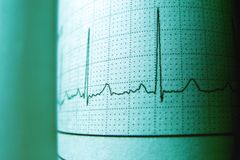
Sleep staging in a laboratory uses simultaneous recordings of brain electrical activity, eye movement and muscle tone from the chin. Trained scorers divide the recording into short epochs and assign each one a stage using published rules built around those three signals. The stages are therefore defined by a scoring convention applied to specific measurements rather than by an underlying biological boundary.
Even between experienced human scorers, agreement on individual epochs is good rather than perfect, which sets a ceiling on any comparison. Any device claiming to report sleep stages is therefore claiming to reproduce a human scoring convention while using entirely different inputs. That is a legitimate engineering goal, and it is a different undertaking from measuring the quantity the convention was written around.
What the device has to work with
A wrist or finger device typically measures movement, pulse timing from an optical sensor and skin temperature at the contact point. From those signals an algorithm infers stage transitions, relying on the fact that autonomic activity and movement differ systematically between stages. The inference is statistically reasonable, since heart rate variability and movement do change in characteristic ways across the night.
It remains an inference from correlated signals rather than a measurement of the quantity the stage definition refers to. The distinction matters most when the correlation weakens, which happens with certain medications, certain conditions and unusual sleep patterns.
Where agreement is good and where it is not
Validation comparing devices against laboratory recording generally finds reasonable agreement on total sleep time and on time in bed. Agreement on distinguishing sleep from wake is better than chance and tends to be poorer at identifying brief awakenings. Agreement on individual stages is substantially weaker, with deep sleep and rapid eye movement sleep frequently confused with each other.
Performance also differs between populations, and devices validated in healthy young adults may behave differently in older users. Manufacturers update their algorithms periodically, so a published validation applies strictly to the software version that was tested rather than to whatever is running today.
Why the reported numbers still move
Because staging is inferred, a night with unusual movement or an unstable optical signal can produce a substantially different profile. Wearing position, fit and skin properties all affect signal quality, which introduces variation unrelated to the night's actual sleep. Users often compare consecutive nights and attribute differences to behaviour when part of the variation comes from the measurement.
Comparing weekly averages rather than individual nights reduces this problem considerably, and it requires no better sensor than the one already on the wrist. That approach also matches how sleep patterns actually vary, since a single unusual night is common and rarely meaningful.
When tracking becomes the problem
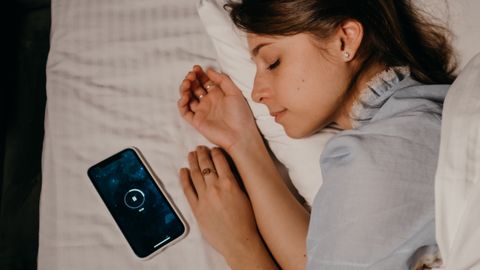
Clinicians have described a pattern in which preoccupation with sleep data worsens sleep by increasing anxiety about it. The mechanism is plausible, since anxiety about falling asleep is a well-established maintaining factor in insomnia. There is also evidence that people can be influenced by a sleep score independently of how they actually slept.
Consumer devices are not diagnostic tools, and conditions such as sleep apnoea require proper assessment rather than a score. Persistent poor sleep, loud snoring or significant daytime sleepiness are reasons to see a clinician rather than reasons to buy a more expensive device.
- Stages are defined by signals wearables do not measure
- Agreement is far better for total sleep than for individual stages
- Anxiety about tracked sleep can affect sleep itself
Also by Aarav Sharma
- Breathwork and carbon dioxide tolerance: what changes during a held breathBiohacking
- Reactive oxygen species act as signals before they ever act as damageCellular Health
- Heterochronic parabiosis: what blood-sharing experiments in animals can and cannot showLongevity Science
- Biological age clocks: what the algorithm behind the number was trained onTop