Sleep Biohacking
The core temperature rhythm and why the evening fall matters for sleep onset
Body temperature follows a daily cycle driven by the internal clock, and the timing of its decline predicts sleep onset more closely than most behavioural factors do.
A rhythm generated internally
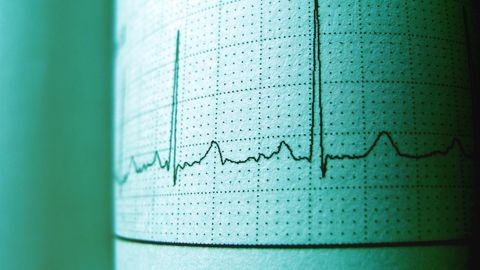
Core body temperature varies across the day in a pattern generated by the internal clock rather than purely by activity or by meals. The rhythm persists under constant conditions in laboratory protocols designed to remove external time cues, which is how its internal origin was established. The lowest point occurs during the latter part of the usual sleep period, a few hours before habitual waking.
Because the rhythm is generated internally, it does not shift immediately when a person changes their sleep schedule. That lag is a substantial part of what makes travel across time zones and rotating shift patterns physiologically difficult rather than merely inconvenient. Realigning the rhythm takes days rather than hours, and the rate of realignment differs depending on the direction of the shift.
What actually produces the evening fall
The decline is achieved largely by increasing blood flow to the hands and feet, which have vascular structures suited to dumping heat. Warming the extremities therefore accompanies rather than opposes the fall in core temperature, which surprises people who expect the reverse. This is the mechanism behind the observation that cold hands and feet are associated with difficulty falling asleep.
The redistribution is driven by the clock and is modulated by the hormone whose secretion rises in the evening under dim conditions. Ambient temperature interacts with this process, since heat loss depends on the gradient between skin and surroundings.
Why timing predicts sleep onset
Sleep onset in laboratory protocols occurs most readily during the window when core temperature is falling most steeply. Attempting to sleep during the rising phase, which occurs in the morning, is markedly harder even after prolonged waking. This is one of the clearest demonstrations that timing and accumulated pressure are separate contributors to sleep propensity.
It also explains why a consistent schedule helps, since a stable schedule keeps the temperature rhythm aligned with the intended sleep period. The relationship is best read as two outputs of a shared underlying driver rather than as temperature causing sleep in any direct sense.
Passive heating and the rebound
Warming the body before sleep, through a bath or shower, produces a subsequent exaggerated fall in core temperature as heat is shed. Trials examining this have generally been small, with variation in timing, water temperature and duration between protocols. Reported effects on time to fall asleep have been modest, and the mechanism proposed is at least consistent with the thermoregulatory picture.
Describing this as an established intervention overstates a literature that remains limited in size and heterogeneous in method. Describing it as implausible would equally misrepresent it, since the proposed mechanism fits what is known about the rhythm.
What wearables are measuring instead
Devices reporting temperature measure skin temperature at the point of contact, which is a different quantity from core temperature. Skin temperature is influenced by ambient conditions, by bedding and by the same peripheral blood flow changes described above. It can track the underlying rhythm reasonably under stable conditions, and it diverges when the environment changes.
Devices generally report deviation from a personal baseline rather than an absolute value, which partly compensates for this. Persistent difficulty falling asleep, or a schedule that cannot be aligned with obligations, is worth raising with a clinician rather than solving with hardware.
- Core temperature falls before and during early sleep
- Heat loss through the extremities drives the fall
- Skin temperature from a wearable is not core temperature
Also by Michael Johnson
- Why functional reference ranges differ from laboratory reference rangesFunctional Medicine
- Lysosomes and the slow ageing of the cell's disposal systemCellular Health
- Rapamycin and mTOR: the distance between animal data and human evidenceLongevity Science
- The self-experiment problem: why an n-of-one result rarely settles anythingTop